
In a world dominated by digital screens, streaming platforms, and on-demand entertainment, theatre continues to stand as one of the most powerful and human forms of storytelling. Despite the convenience of films and television, live theatre offers something that recorded media cannot fully replicate: a shared, real-time experience between performers and audience.
Theatre is not just entertainment; it is an art form built on presence, emotion, and connection.
Why Theatre Is Still Relevant
Even with the rise of cinema and online streaming, theatre remains relevant because it offers a unique emotional depth. Watching a performance unfold live creates a sense of immediacy and authenticity that recorded media cannot match.
Every performance is slightly different. Actors may change their tone, timing, or energy depending on the audience’s reactions. This makes each show a one-time experience that cannot be duplicated.
The Emotional Connection Between Actors and Audience
One of the most powerful aspects of theatre is the direct emotional connection between actors and the audience. Unlike film actors, theatre performers can see and feel the audience’s reactions in real time.
This interaction creates a feedback loop of energy. A laugh, silence, or applause can influence the intensity and rhythm of a performance. This shared emotional space makes theatre deeply engaging and memorable.
The Discipline of Theatre Acting
Theatre acting is considered one of the most demanding forms of performance. Actors must memorize entire scripts, perform live without mistakes, and maintain character consistency throughout the show.
They must also project their voice clearly, use precise body language, and stay emotionally connected to their role for long periods. This level of discipline requires years of training and practice.
Unlike film acting, there are no retakes in theatre—only live performance.
Storytelling Without Filters
Theatre tells stories without editing, camera angles, or post-production effects. Everything happens in real time on stage. This raw form of storytelling allows audiences to experience the narrative in its purest form.
Because of this simplicity, theatre relies heavily on strong writing, powerful acting, and creative stage design to bring stories to life.
The Role of Stage Design in Theatre
Stage design plays a crucial role in shaping the audience’s experience. Set designers use lighting, props, and scenery to create different environments and moods.
Even minimalistic stage setups can be powerful when combined with imaginative storytelling. In many cases, the audience’s imagination fills in the gaps, making the experience even more immersive.
Theatre as a Social Mirror
Throughout history, theatre has reflected society’s values, struggles, and transformations. Many plays address important issues such as politics, justice, inequality, love, and identity.
By presenting these themes on stage, theatre encourages audiences to reflect on their own lives and society as a whole. It can inspire discussion, awareness, and sometimes even social change.
The Experience of Watching Theatre
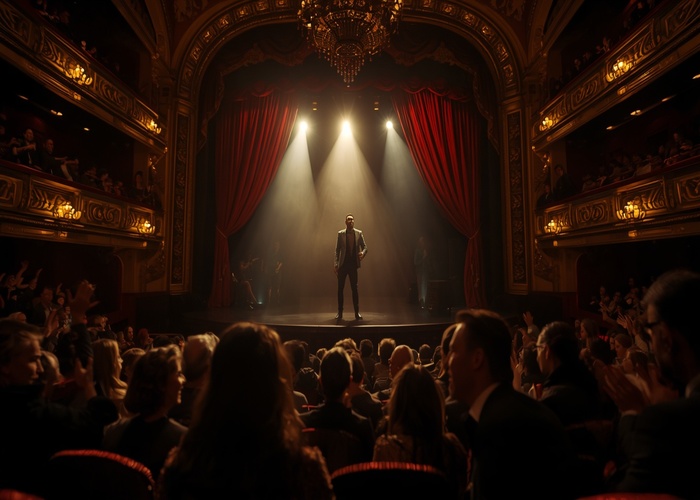
Watching a theatre performance is different from watching a movie or TV show. The audience is physically present in the same space as the performers, creating a shared atmosphere.
This presence makes the experience more immersive. The silence before a dramatic moment or the applause after a powerful scene becomes part of the storytelling itself.
Modern Innovations in Theatre
Although theatre is an ancient art form, it continues to evolve. Modern productions often incorporate technology such as digital projections, advanced lighting systems, and sound effects to enhance storytelling.
Some performances even experiment with hybrid formats, combining live acting with multimedia elements or virtual participation.
Despite these innovations, the core of theatre remains unchanged: live human performance.
The Global Nature of Theatre
Theatre exists in nearly every culture around the world, each with its own traditions and performance styles. From classical Western drama to traditional Eastern performance arts, theatre reflects cultural identity and heritage.
International festivals and collaborations have helped theatre grow as a global art form, allowing artists to share ideas and inspire one another.
The Future of Theatre
While digital entertainment continues to grow, theatre is unlikely to disappear. Instead, it will continue adapting and evolving.
Future theatre may blend live performance with digital technology, global streaming, and interactive storytelling. However, the human connection at the heart of theatre will always remain its most important feature.
Conclusion
Theatre remains one of the most powerful forms of storytelling because it is immediate, emotional, and deeply human. It connects performers and audiences in a shared moment that cannot be replicated.
Even in the modern digital age, theatre continues to inspire, challenge, and move people around the world, proving that live performance will always have a place in human culture.